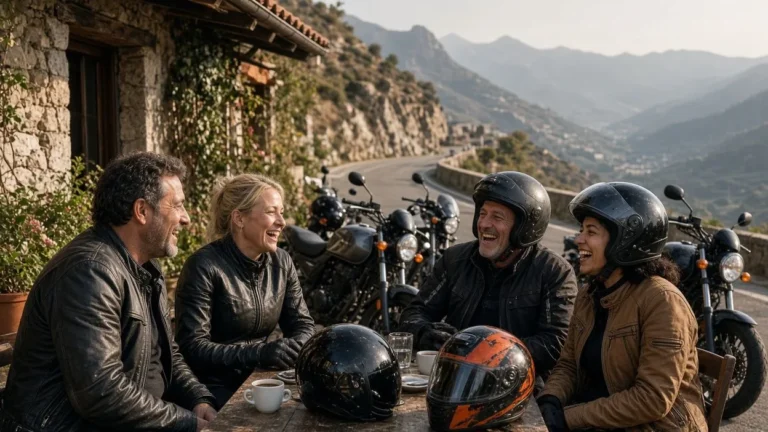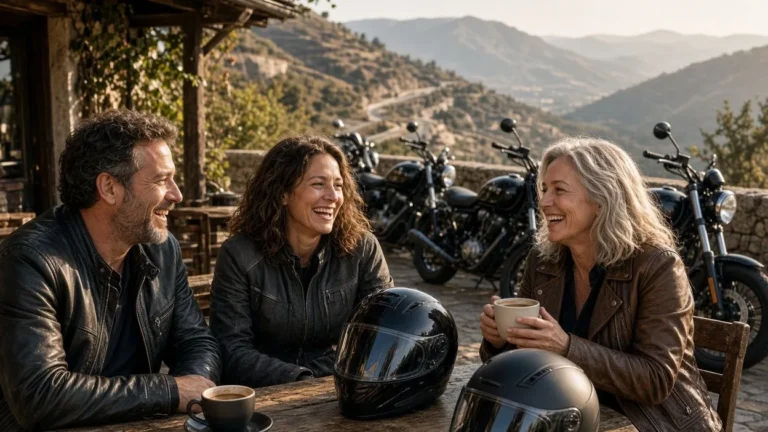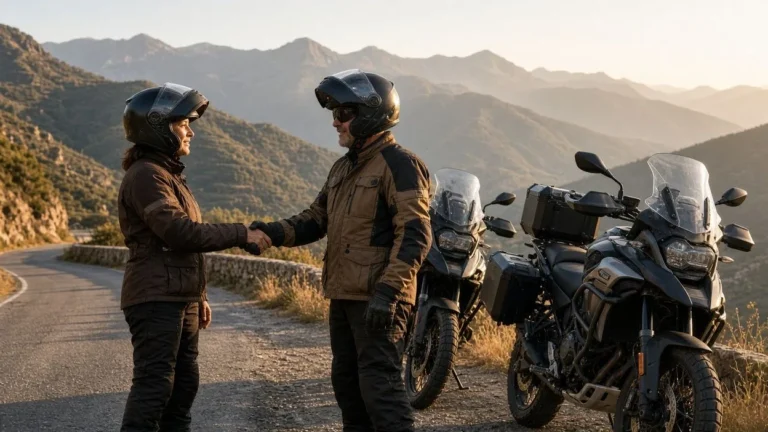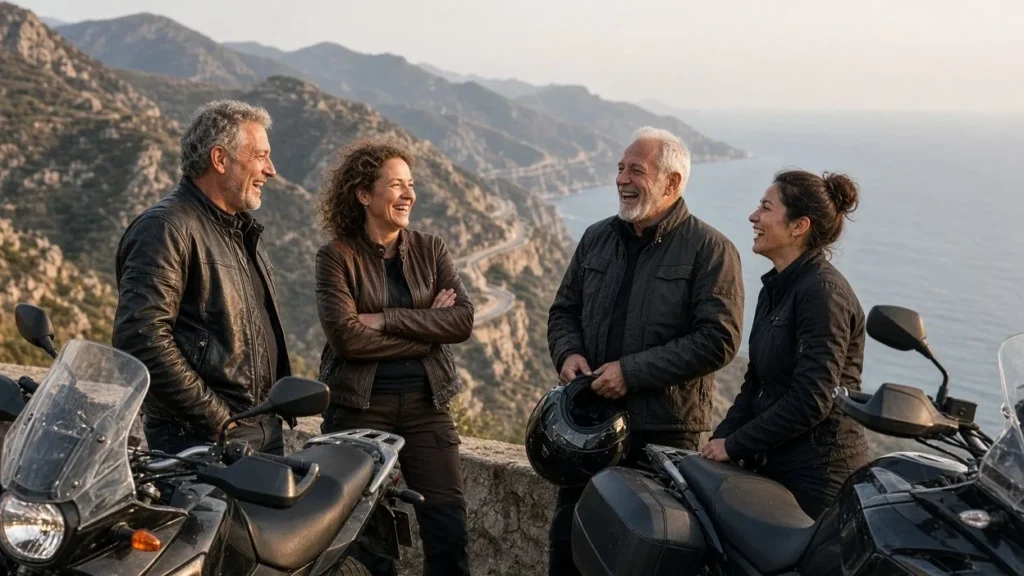
Short answer: riding solo or in a group isn’t better or worse, it’s different. Riding solo gives maximum freedom and focus: you choose the route, the pace and the breaks. Riding together is more sociable, you have help if you break down or crash, and you discover new roads through the other rider. The biggest pitfall of group riding is peer pressure: if you ride faster than you really want to, the advantage disappears. That’s why many riders combine both: solo for a spontaneous ride, together with a regular riding buddy or a small group for longer rides.
Some riders swear by their solo rides, others only get on the bike if someone comes along. Both are right, because it depends on what you want from a ride. In this article we honestly compare the pros and cons of riding solo and riding in a group, explain when to choose which, and give you 7 tips for riding together safely.
Pros of riding solo
- Total freedom: you leave when you want, take every side road you see and stop wherever you like.
- Your own pace: no pressure to keep up and no frustration with someone who rides too slowly.
- Full focus: you only pay attention to the road and your own line, not to the bike in front of you.
- Peace of mind: for many riders, a solo ride is exactly how they clear their head.
- Nobody to wait for: no juggling calendars, fuel stops or people running late.
Cons of riding solo
- No help if you break down or crash: on a remote road it can take a long time before someone finds you.
- Less sociable: you share the best view or the best corner with no one.
- You stay in your own routine: you often ride the same roads and learn less from others.
- Less motivation: without a plan, the bike stays in the garage sooner when the weather is iffy.
Do you often ride alone? Tell someone at home which way you’re heading and roughly when you’ll be back, make sure your phone is charged, and add an emergency contact and your medical details to your phone’s Medical ID. These can be viewed even when your phone is locked.
Pros of riding together
- Help if you break down or crash: there’s always someone who can help, call for help or warn traffic.
- Good company: coffee together, talking through the ride and sharing memories.
- New roads: someone else knows routes and spots you’ve never ridden.
- You learn from each other: from lines through corners to maintenance tips.
- Commitment: with a plan for Saturday morning, you simply ride more often.
Cons of riding together
- Peer pressure: you ride faster or take more risks than you would alone, just to keep up.
- Following instead of looking: you copy the line and decisions of the rider in front, even when they aren’t right for you.
- The accordion effect: in a group the gaps keep shrinking and growing, so the riders at the back have to catch up or brake hard.
- Less freedom: you agree on route, pace, breaks and fuel stops together.
- Planning: finding a day that suits everyone sometimes takes more effort than the ride itself.
Riding solo or in a group: comparison
| Aspect | Riding solo | Riding together |
|---|---|---|
| Freedom | Maximum | Agreed together |
| Pace | Always your own pace | Risk of peer pressure |
| Help if you break down or crash | Depends on others | Right there |
| Company | Peace and time for yourself | Shared experience and stories |
| Discovering new routes | Figure it out yourself | Learn from each other |
| Planning | Leave on a whim | Needs arranging |
| Best for | Short rides, clearing your head | Day trips, unfamiliar areas, new riders |
When should you ride solo, and when together?
- Ride solo for a spontaneous evening ride, when you want to clear your head, or when you want to get used to a new bike at your own pace.
- Ride together for a long day trip, a ride through unfamiliar or remote areas (like mountain passes or empty back roads), when you’ve just passed your test, or when you’re building up again after a motorcycle accident.
- The happy medium: ride with one regular riding buddy who has roughly your pace and riding style. You get the benefits of riding together, with few of the group downsides.
7 tips for riding together safely
- Agree on things beforehand: route, breaks, where you refuel (fill up based on the bike with the smallest range) and what to do if someone loses the group.
- The slowest rider sets the pace. Put an experienced rider at the back to keep an eye on everyone.
- Ride staggered on straights: alternating left and right in your lane, with at least two seconds to the rider directly in front of you. In corners everyone takes their own line, single file.
- Ride your own ride: never follow blindly. If a traffic light turns amber, just stop. The group waits after the junction.
- Wait at turns: the leader, or a rider at the turn, waits until the next rider sees the turn. That way nobody gets lost and nobody has to ride too fast to keep up.
- Agree on a few hand signals, for example for fuel, a break, hazard on the road and “go ahead”.
- Keep the group small: two to six bikes stays manageable. With more riders, split into smaller groups, each with its own leader and sweep.
How do you find a riding buddy?
Most riding buddies come through friends, a motorcycle club, an organised group ride or a local Facebook group. A faster way is an app: with Revamigo you see riders near you, with their bike, riding style and experience. That way you find someone who matches your pace, and that’s the most important condition for enjoying riding together. After a match you chat first, and you pick a Moto Spot from the app as a meeting point. Keep the first ride short and meet in a public place. All the options are in our guide on how to find motorcycle riders.
Frequently asked questions about riding solo or in a group
Is riding in a group safer than riding alone?
Not by definition. The advantage of riding together is that help is right there if you break down or crash. The downside is peer pressure: riders sometimes go faster or take more risks to keep up. Riding together is safer mainly when you agree on things beforehand and the slowest rider sets the pace.
How much distance should you keep when riding with several bikes?
Keep at least two seconds to the rider directly in front of you. On straights, ride staggered, alternating left and right in the lane. In corners, everyone rides single file and takes their own line.
How big can a group of motorcycle riders be?
In most places there’s no legal limit (check your local rules), but in practice two to six bikes is the most manageable. With bigger groups, split into smaller groups, each with its own leader and sweep, so other road users can merge in between.
What if my riding buddy is much faster than me?
Talk about it beforehand. Agree that the faster rider waits at turns and set points, or let the slowest rider lead. If you still feel pressured, look for someone who better matches your pace.
Is riding alone dangerous?
Riding alone isn’t more dangerous on the road itself, but if something happens, it takes longer for help to arrive. So tell someone at home which route you’re riding, make sure your phone is charged and add an emergency contact to your phone’s Medical ID.
How do I find someone to ride with?
Through friends, a motorcycle club, organised group rides, Facebook groups or an app like Revamigo. In Revamigo you see riders near you with their bike, riding style and experience, so you find someone who matches your pace.
Summary
Riding solo gives freedom and peace, riding together gives company, help and new roads. You get the best of both with a regular riding buddy who matches your pace, and a few clear agreements before you set off. That keeps riding together fun, and safe.
Disclaimer: The tips in this article are general and meant as help and inspiration. They are not legal rules and don’t replace professional rider training. You are responsible for your own riding and safety, including when you ride with people you met through Revamigo. Revamigo is not liable for damage or injury resulting from the use of these tips.
Looking for an app to help? See our comparison of the best motorcycle apps.
More to read: how to find a motorcycle riding buddy and the Revamigo motorcycle social app.
Also see: how to make motorcycle friends, motorcycle groups near me, free motorcycle apps and Revamigo vs REVER.