To plan a group motorcycle ride, choose riders with a similar pace, pick a route and a meeting point everyone can reach, keep the group small, name a lead and a sweep rider, agree signals and fuel stops before you start, and ride in a staggered formation at the pace of the least experienced rider.
A good group ride feels easy because the decisions were made before anyone started an engine. This guide walks through nine steps, in the order you will need them, from finding the right riders to what to do when someone gets separated. If you are still deciding whether a group is for you, read about riding solo or in a group first.
Step 1: Choose riders with a similar pace and style
The biggest cause of a bad group ride is a mismatch in pace. A sport rider who likes to push through bends and a relaxed tourer who enjoys the view will both be unhappy after thirty minutes. Ask each rider about their riding style, experience and the kind of roads they enjoy before you commit.
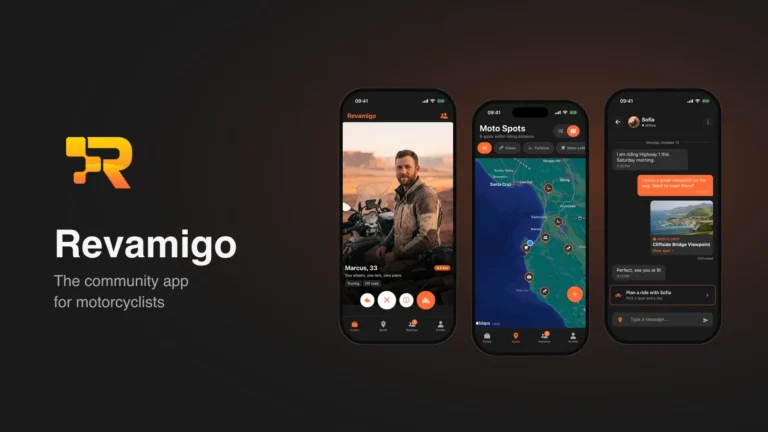
If you do not have a crew yet, you can find motorcycle riders who ride the way you do. In Revamigo you can filter riders nearby by bike, riding style (casual, sport, touring, off-road, track or commuting) and experience, then chat before you decide to ride together.
Step 2: Keep the group small
Smaller groups are easier to keep together, easier to park and easier to regroup after traffic lights. Many experienced riders keep a group to about six or seven riders. If more people want to join, split into two groups with their own lead and sweep rider.
Step 3: Pick a route that fits the least experienced rider
Plan the route around the rider with the least experience or the smallest fuel range, not the fastest one. Look at the total distance, the type of roads and how many fuel stops you need. Share the route with everyone before the day so nobody has to guess.
- Choose roads that all riders have a fair chance of handling comfortably.
- Plan a fuel stop before the smallest tank is close to empty. Small tanks may need fuel sooner than you think.
- Have a plan B for bad weather or a closed road.
Step 4: Choose a meeting point and a time
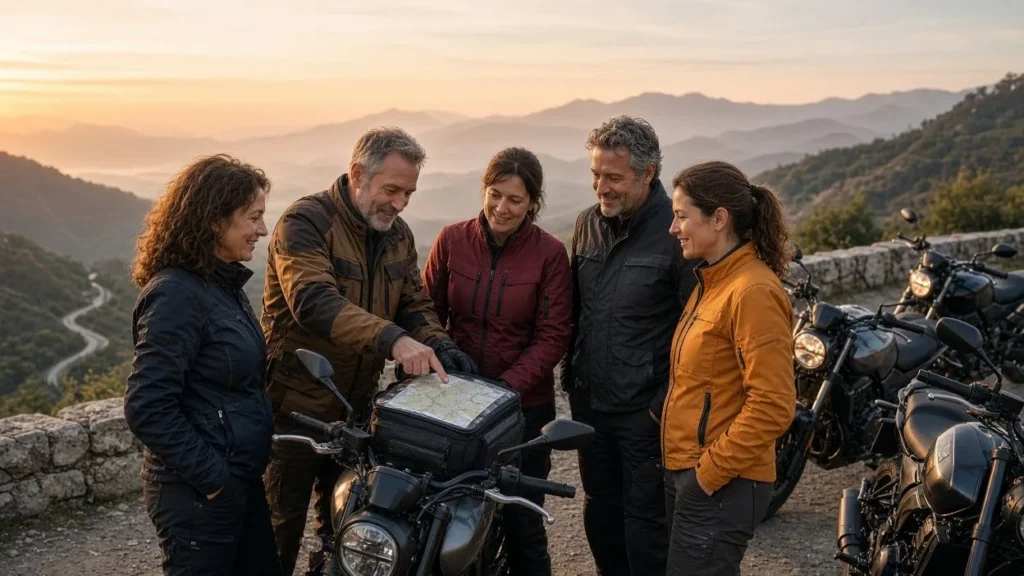
Pick a meeting point that is easy to find, has parking for every bike and offers a coffee while you wait. A petrol station or a moto café works well. Send a map pin instead of an address, and agree a departure time that is slightly later than the arrival time so latecomers do not rush.
In Revamigo you can share a Moto Spots spot straight into the chat, so everybody gets the same pin. Spots are places added by riders: viewpoints, twisty roads, moto cafés, photo spots, meetups and off-road tracks. You can open any spot in Google Maps, Waze or Apple Maps.
Step 5: Agree on a lead rider and a sweep rider
- Lead rider: knows the route, sets a pace that suits the group and signals changes early.
- Sweep rider: rides last, keeps an eye on the whole group and stops if someone has a problem.
- Everyone else: keeps the rider behind in sight in the mirror and does not overtake the lead.
Step 6: Agree on signals and rules before you ride
Spend five minutes at the meeting point on the basics. Agree a handful of simple signals for stopping, fuel, a hazard on the road and slowing down. Agree what happens if the group is split at a junction: the lead waits at the next safe place and nobody speeds up to catch up.
Step 7: Ride in staggered formation
On a straight road, riders take alternating positions in the lane: one on the left side, the next on the right, and so on. This gives each rider room to react and keeps the group compact. Keep a safe gap to the rider ahead in your own track, roughly two seconds, and ride single file on tight bends, in poor visibility or on narrow roads.
Step 8: Plan regular stops
Stop roughly every one to two hours to drink, stretch and regroup. Tiredness slows reactions long before you feel exhausted. A stop is also the best moment to check in with each other about pace and to adjust the plan if the weather or the energy of the group changes.
Step 9: Prepare for problems
- Share phone numbers or keep a group chat open for the day.
- Agree the next stop in advance, so a separated rider knows where to go.
- Check tyre pressure, fuel, lights and gear before you leave.
- If someone is in trouble, the sweep rider stays with them and the rest wait at the next safe place.
Plan your next group ride with Revamigo
Revamigo is a free app for motorcyclists. Find riders near you, chat with the ones you connect with, share a Moto Spot as the meeting point and plan the ride together. If this is your first ride with someone new, read our tips for a first ride with someone new.
Frequently asked questions
How many riders should be in a group ride?
Keep it to about six or seven riders. Larger groups are harder to keep together, so split into two groups with their own lead and sweep rider.
Who should lead a group motorcycle ride?
The rider who knows the route best and is comfortable setting a pace that suits the least experienced rider. A good lead signals changes early and checks the mirrors often.
What if riders in the group have different paces?
Ride at the pace of the least experienced rider and regroup at every stop. If the difference is large, ride in two groups instead of pushing anyone beyond their comfort.
How do I find riders for a group ride?
Ask friends first, then find motorcycle riders near you. Look for riders with a similar bike, riding style and experience, and chat before you plan the ride.
Looking for an app to help? See our comparison of the best motorcycle apps.
More to read: how to find a motorcycle riding buddy and the Revamigo motorcycle social app.
Also see: how to make motorcycle friends, motorcycle groups near me, free motorcycle apps and Revamigo vs REVER.