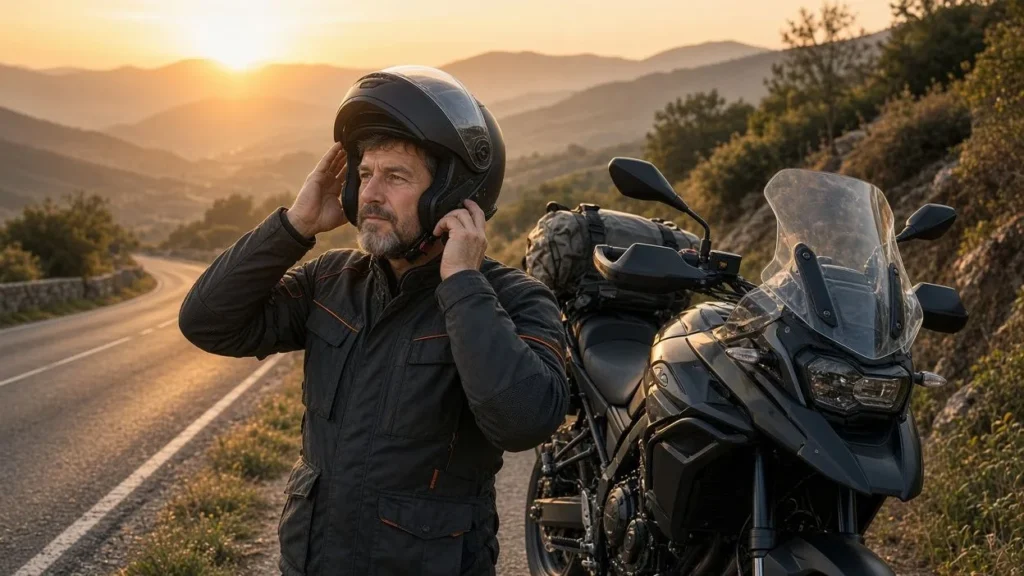
Short answer: getting back on a motorcycle after an accident works best in small, controlled steps. Recover physically first, have your bike and gear checked, and replace your helmet. Then start with short rides on quiet, familiar roads, in daylight and dry weather, ideally with someone you trust who sticks to your pace. Fear is a normal reaction, not a sign that you can’t do it anymore. If the fear is just as strong after a month, or you have flashbacks and nightmares, talk to your doctor or contact a victim support service.
A crash or collision on your motorcycle turns your confidence upside down. Even if you came out of it physically fine, the first ride afterwards can feel harder than you expected: you tense up in a corner, flinch at a car pulling out of a side road, or would rather leave the bike in the garage. In this article you’ll read how to get back on the bike step by step, how to tell you’re ready, and when it’s wise to get help.
Is fear after a motorcycle accident normal?
Yes. After an accident your alarm system is still on high alert. Your body is trying to stop it from happening again. You might notice this as:
- flinching or tensing up in corners, at junctions or at the place of the accident
- leaving the bike in the garage even though you actually want to ride
- replaying the moment itself over and over
- sleeping badly or feeling tense in the days before a ride
For many people these reactions fade on their own in the weeks after the accident, especially if they start riding again in small steps. Road crash victims and their families can get free practical and emotional support from victim support services, such as RoadPeace and Victim Support in the UK. Elsewhere, your doctor can point you to a local service.
When are you ready to ride again?
There’s no fixed timeline. Use this checklist as a guide:
- Your doctor or physiotherapist says it’s physically OK.
- You can hold, turn and put your bike on its stand without pain.
- You’re not taking medication that affects your ability to ride. If in doubt, ask your pharmacist.
- Your bike has been checked or repaired since the accident.
- Your helmet and protective gear have been replaced or checked.
- You want to do it yourself. Not because friends, good weather or a planned ride are putting pressure on you.
Back on the bike after an accident in 6 steps
1. Have your bike and gear checked
After a crash, also have the parts checked that look fine from the outside, such as brakes, handlebars, forks and tyres. Always replace your helmet after an impact, even if you can’t see any damage: the shock-absorbing layer inside may be compressed. Also check your jacket, trousers, gloves and boots for worn patches, torn seams and damaged armour.
2. Start without riding
Sit on your bike, start it and feel the clutch and brakes. Then ride a few laps of an empty car park: pulling away, braking, slow U-turns. It might sound over the top, but this is how your body learns again that the bike feels predictable and safe.
3. Take a short ride on a familiar road
Choose a quiet route you know well, in daylight and dry weather. Twenty minutes is enough. Stop as soon as you notice yourself tensing up. That’s not failing, that’s exactly how you build up. Then make the rides longer step by step.
4. Ride with someone you trust
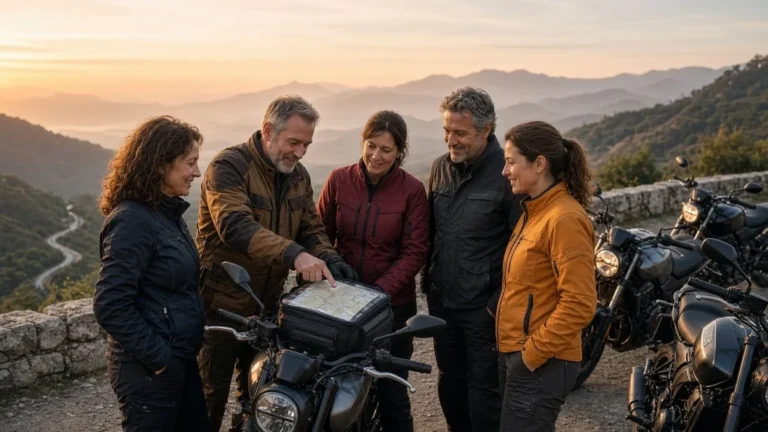
A calm riding buddy in front of you gives you something to hold on to: you follow a predictable line and an easy pace. Agree beforehand that you set the pace and the breaks, and that you can always peel off. Read more about the pros and cons in riding solo or in a group.
5. Deliberately practise the difficult situation
Did the accident happen in a corner, at a junction or in the rain? Only practise that kind of situation once your other rides are going well: first somewhere quiet, and possibly with an instructor. Practising it in a controlled way takes the charge out of the situation.
6. Take an advanced riding course
On an advanced riding course you practise emergency stops, swerving, vision and cornering technique in a safe environment. Riding schools offer these, as do schemes such as IAM RoadSmart and BikeSafe in the UK and MSF courses in the US. Many riders find afterwards that their bike can do more than they thought, and so can they.
Why does a riding buddy help after an accident?
Starting again on your own is hard. A riding buddy helps in four ways:
- Calm and rhythm: you follow a predictable line and don’t have to work everything out yourself.
- An extra pair of eyes: someone who notices you’re getting tired or tense and suggests a break.
- Someone to talk to: after the ride, talking through what went well, and what felt scary.
- Commitment: a plan makes it easier to actually get the bike out.
Do choose someone who respects your pace. A ride with a faster group often backfires after an accident: you end up riding their pace instead of yours.
Nobody around you who wants to ride calmly with you? With Revamigo you find riders near you. You see each rider’s bike, riding style and experience, so you choose someone who matches your pace. After a match you agree in the chat how you want to ride, and you pick a Moto Spot from the app as a meeting point. Tip: be honest that you’re building up again after an accident. The right riding buddy won’t mind at all. More ways are in our guide on how to find motorcycle riders.
What should you avoid after a motorcycle accident?
- Going on a long ride straight away. With a full day trip as your first ride, you’ll very likely get home tired and tense.
- Riding with a fast group. Peer pressure is extra risky after an accident.
- Pushing the fear away. Pretending nothing’s wrong keeps the tension going. Talking about it helps.
- Riding in pain or when tired. Your reactions are slower, exactly what you don’t want right now.
Frequently asked questions about riding after an accident
How long does it take for the fear of riding to go away?
It differs per person and per accident. For many riders, the tension and startle reactions fade in the weeks after the accident, especially if they start riding again in small steps. If you notice no improvement after a month, or you have flashbacks and nightmares, contact your doctor.
Do I need to replace my motorcycle helmet after a crash?
Yes. A helmet is designed to absorb one impact. Even without visible damage, the shock-absorbing layer inside may be compressed, so the helmet protects you less well in a next crash.
Is it normal to lose interest in riding after an accident?
Yes. Some riders stop after an accident, and that’s a completely valid choice. Give yourself time: for many people the desire comes back once they’ve recovered physically. Either way, don’t get back on the bike because others expect you to.
Does an advanced riding course help after a motorcycle accident?
Yes, often. On a course you practise emergency stops, swerving and cornering technique in a safe environment. That gives you back confidence in yourself and your bike. Riding schools and schemes like IAM RoadSmart, BikeSafe and MSF offer these courses.
Where can I get help if the accident keeps affecting me mentally?
Start with your doctor, who can refer you to a psychologist if needed. Victim support services, such as RoadPeace and Victim Support in the UK, offer free practical and emotional support to road crash victims and their families.
How do I find someone to ride with calmly?
Ask around in your own circle, at a motorcycle club or through an app like Revamigo. In Revamigo you see riders near you with their bike, riding style and experience, so you find someone who matches your pace.
Summary
Riding again after an accident is a process, not a test. Recover physically first, have your bike and gear checked, start small and build up slowly, ideally with someone you trust. If the fear stays strong, get help. That’s not weakness, it’s smart.
Disclaimer: The information in this article is general and meant as help and inspiration. It is not medical, psychological or professional riding advice and doesn’t replace advice from a doctor, psychologist or riding instructor. You are responsible for how and when you start riding again. Revamigo is not liable for damage or injury resulting from the use of these tips.
Looking for an app to help? See our comparison of the best motorcycle apps.
5 comments on “Riding again after a motorcycle accident: how to overcome the fear”
Comments are closed.